Single Implant
One post, one crown. Usually the right answer for a tooth lost to impact or fracture, where the teeth on either side are healthy and should be left alone.

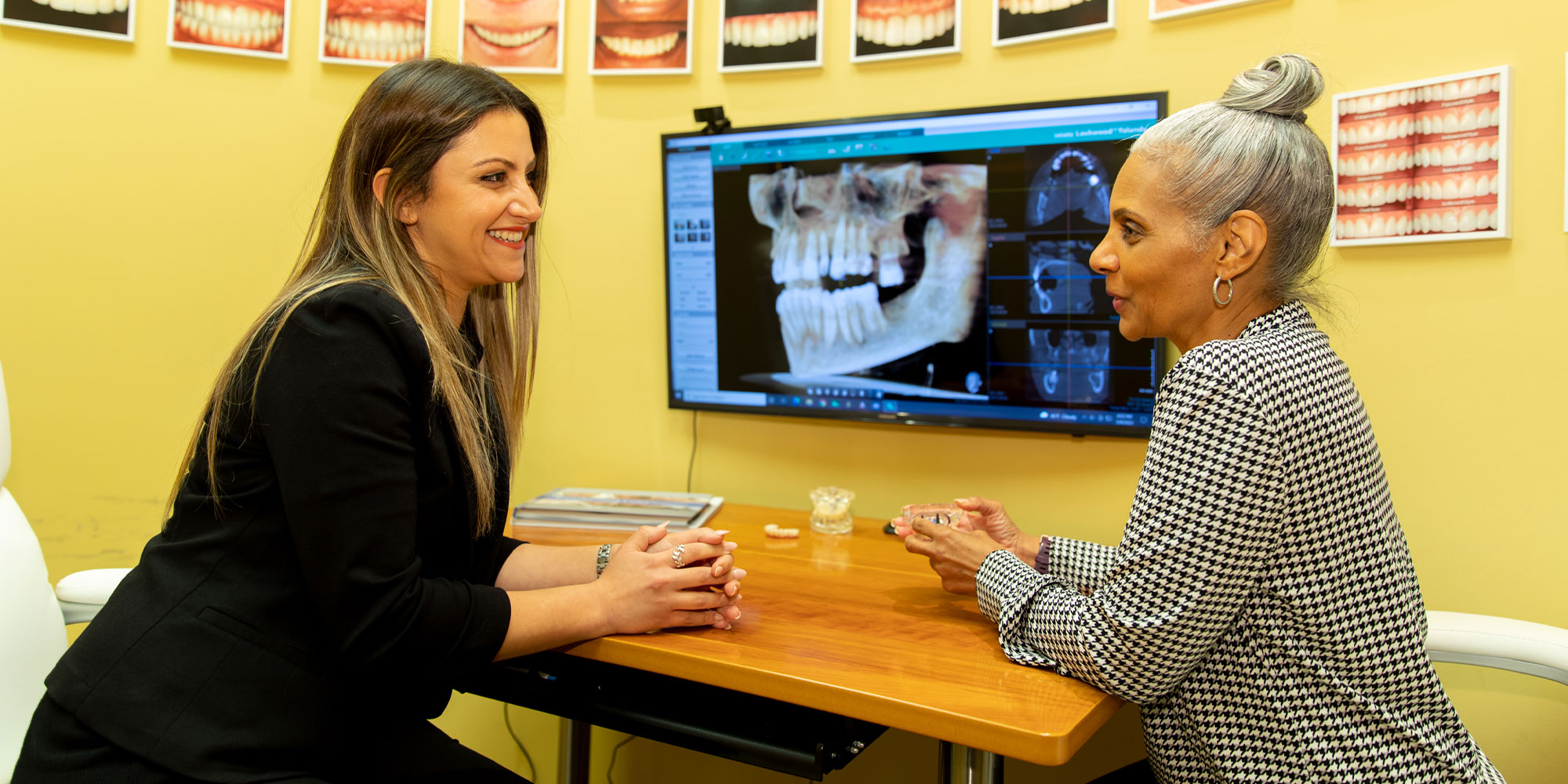
An implant is not a better denture. It is a titanium root fused into your jaw, an abutment on top of it, and a tooth built to your bite, planned and placed by the same board-certified prosthodontist, in McLean and Alexandria.
A dental implant has three components. A titanium post is placed into the jawbone, where bone grows onto it and locks it in place. An abutment sits on that post above the gum. The restoration, the tooth you actually see, is made to your shade, your shape and your bite, and screws or cements onto the abutment.
That middle step is the one nobody talks about. Integration takes roughly four months, and it is the reason implants do not slip, rub or need adhesive. The post stops being hardware and starts being anchorage.
It is also why planning matters more than placing. A post put in the wrong position integrates just as firmly as one put in the right position, and then the tooth on top of it can never be right. Designing the final teeth first, then placing implants to serve them, is the whole argument for having a prosthodontist do both halves.
The specialist behind the planWhat you need depends on how many teeth are gone, how long they have been gone, and what the bone underneath is doing. These four cover almost every case that walks in.
One post, one crown. Usually the right answer for a tooth lost to impact or fracture, where the teeth on either side are healthy and should be left alone.
Two implants carry a span of teeth between them. Replaces several missing teeth in a row without putting the load on natural teeth beside the gap.
A denture that clips onto implants instead of resting on gums. It stops moving, and the pressure moves off the tissue and onto the bone where it belongs.
A fixed arch of teeth on four or more implants: zirconia, screwed down, not removed at night. The gold standard when a whole arch has failed. See All-on-4 →
Treatment runs from a few months to over a year, depending on whether bone has to be rebuilt first. Here is the shape of it.
A cone-beam scan shows the bone you actually have. You leave knowing whether you are a candidate, what it costs, and how long it takes.
Often a few hours, through a surgical guide built from your scan, under sedation. Most patients have no memory of the appointment.
Bone grows onto the posts. Rest for a few days, back to normal within a week, soft foods while it fuses. A temporary restoration is usually worn throughout.
A checkup, then the definitive restoration, using state-of-the-art zirconia for full-arch work, shaped, shaded and bite-balanced by the specialist who planned it.

Dentures sit on the gum and move. That movement is what causes the rubbing, the adhesive, the food restrictions and, over years, the bone loss that changes the shape of a face. An implant loads the bone instead of the tissue, which is what slows that recession down.
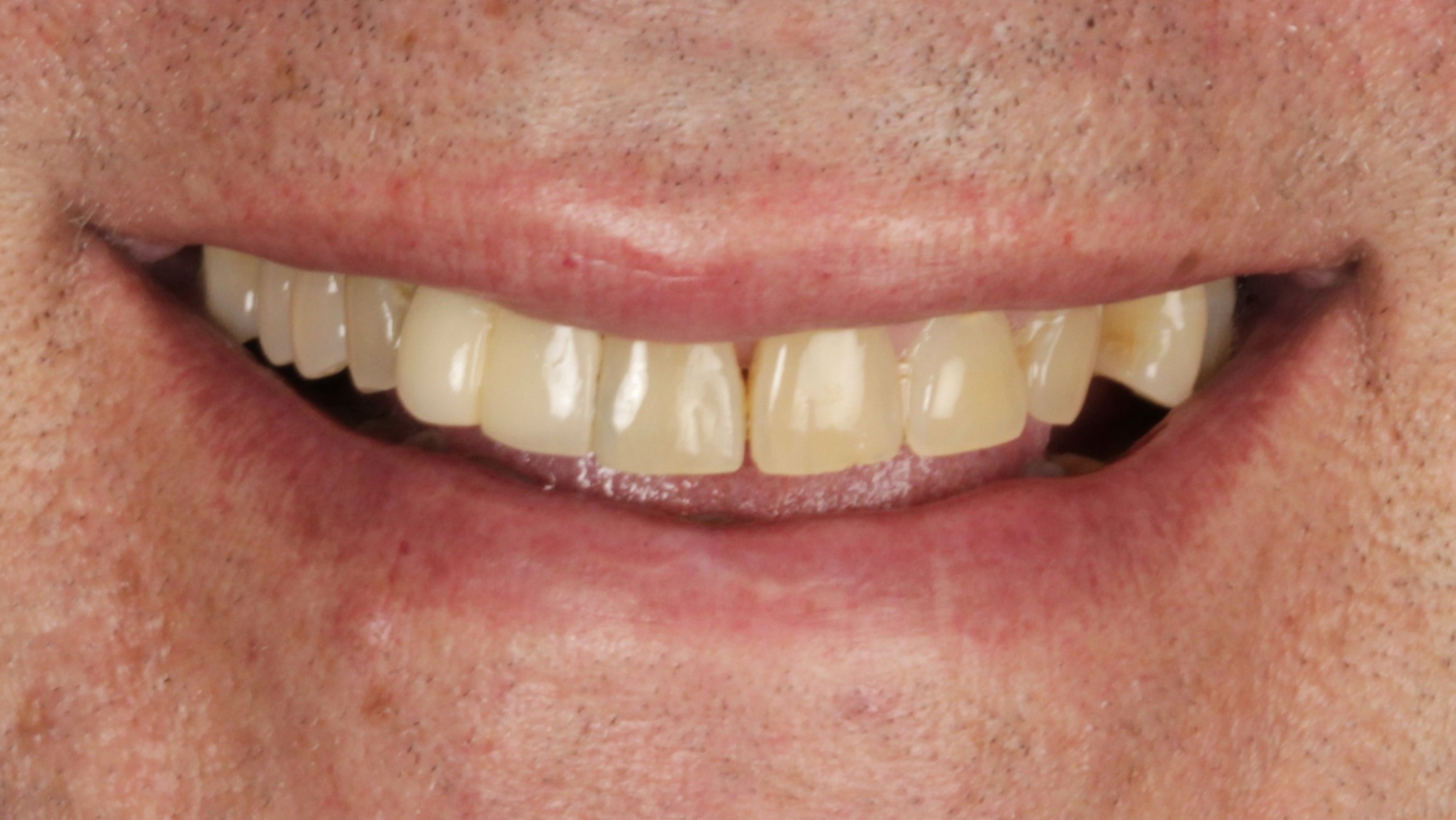
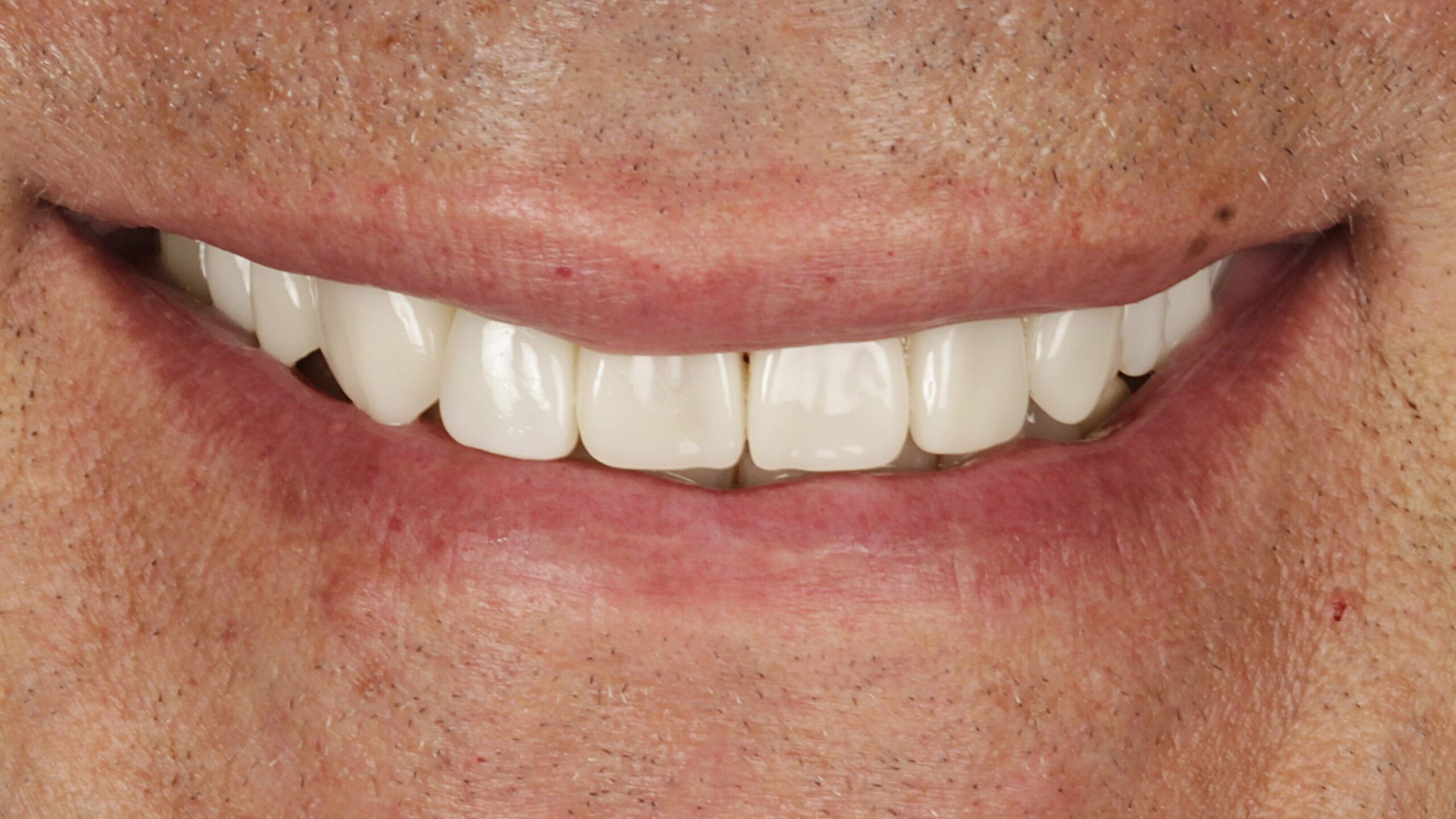 BeforeAfter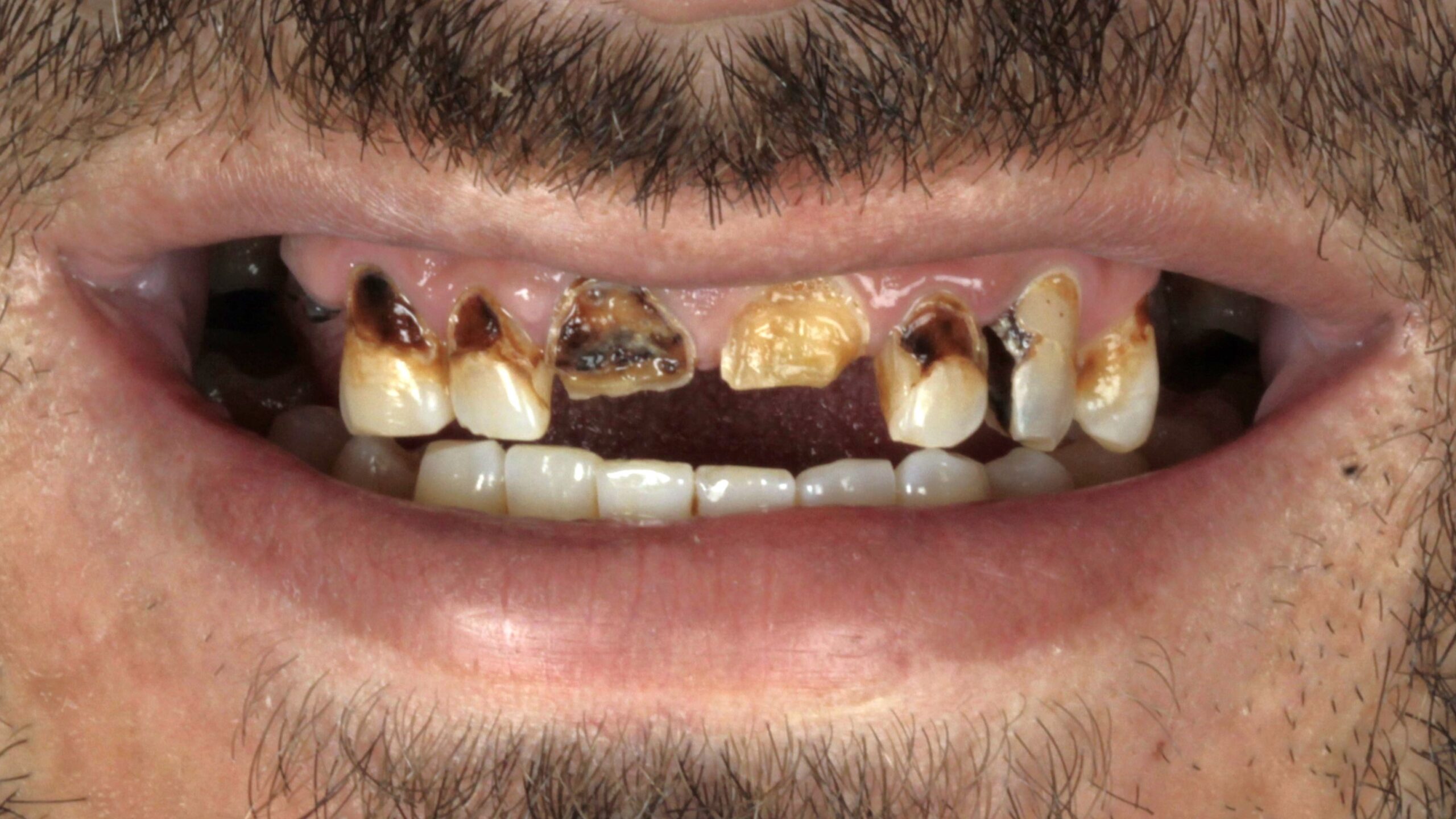
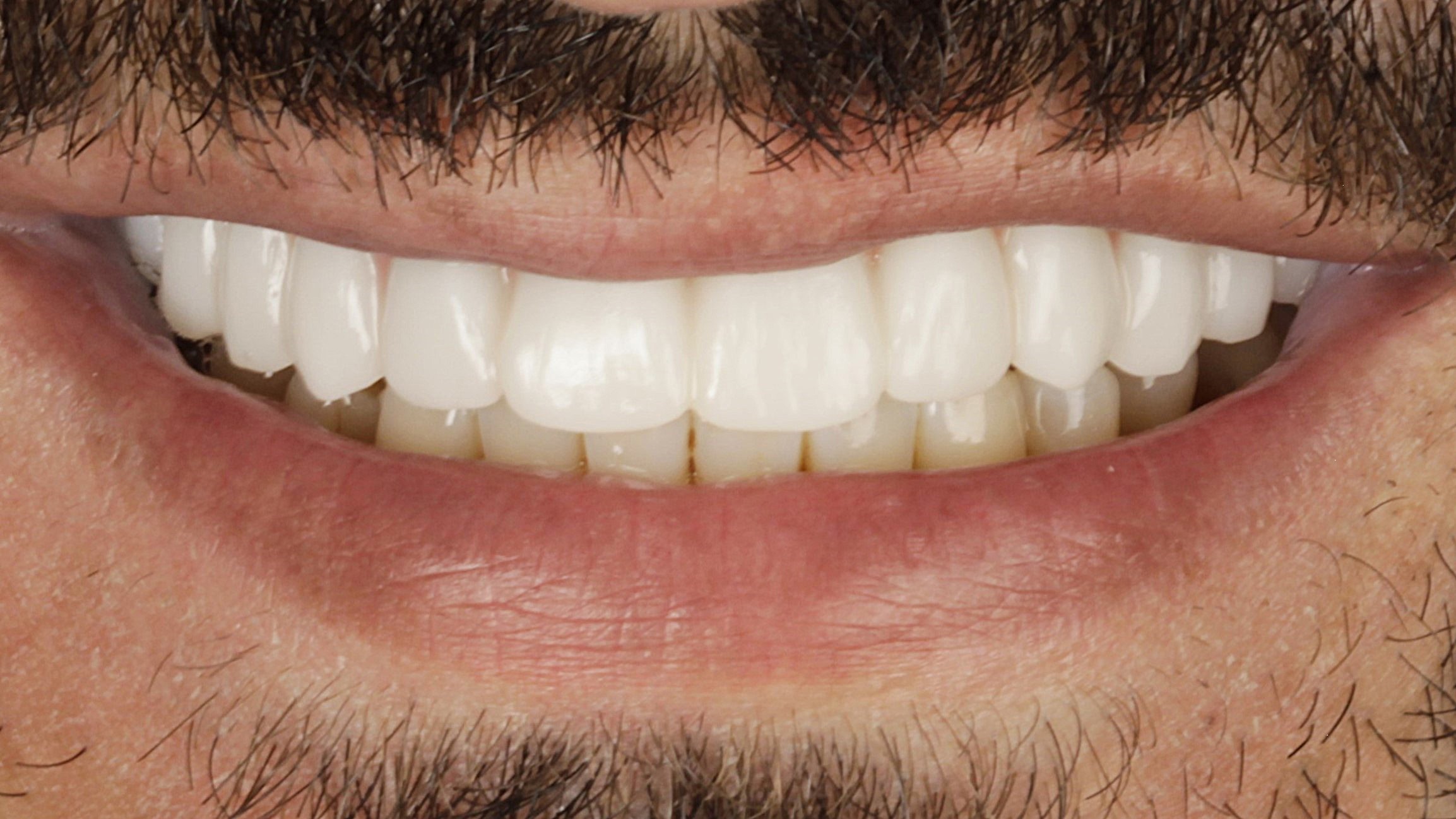 BeforeAfter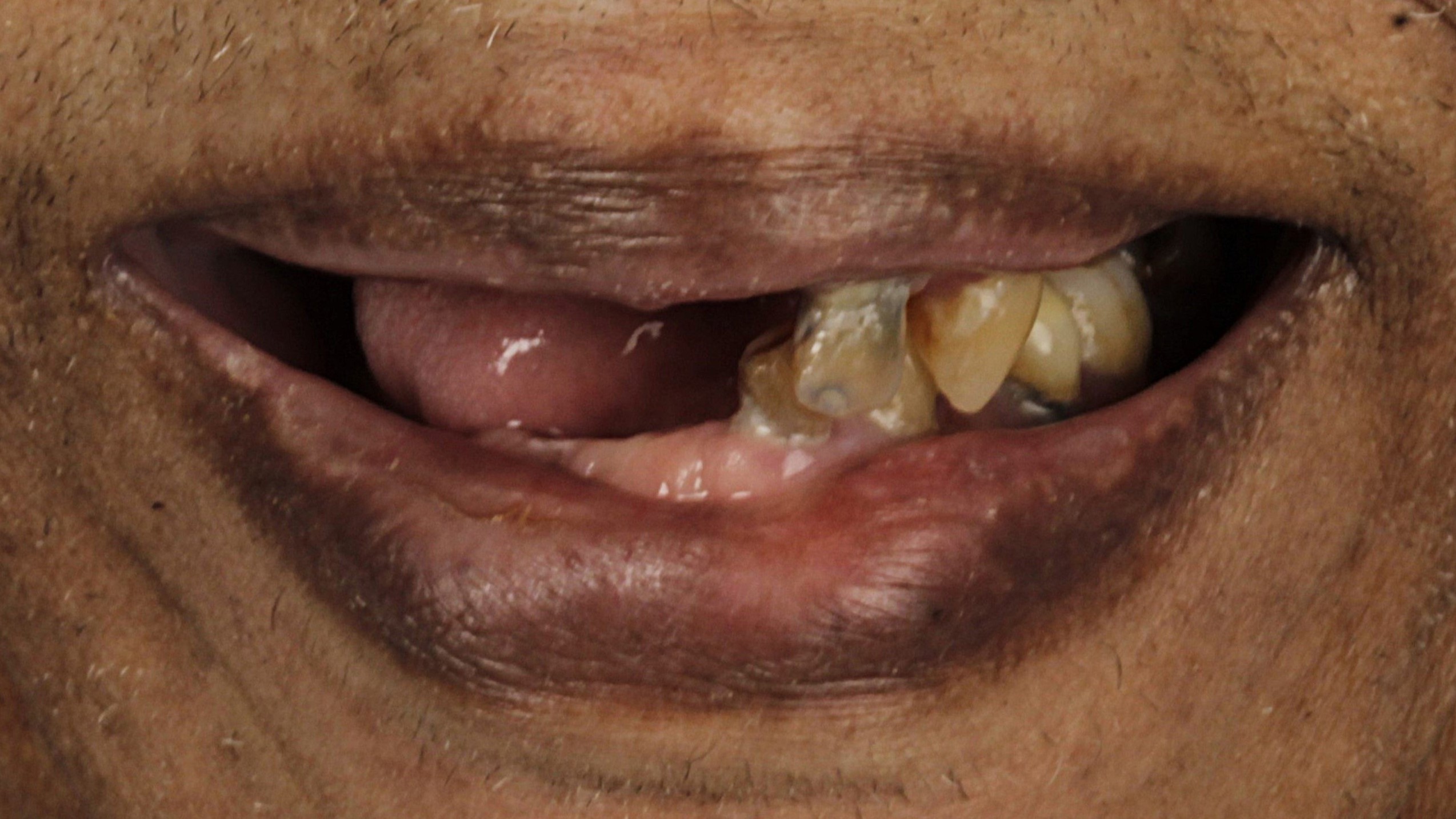
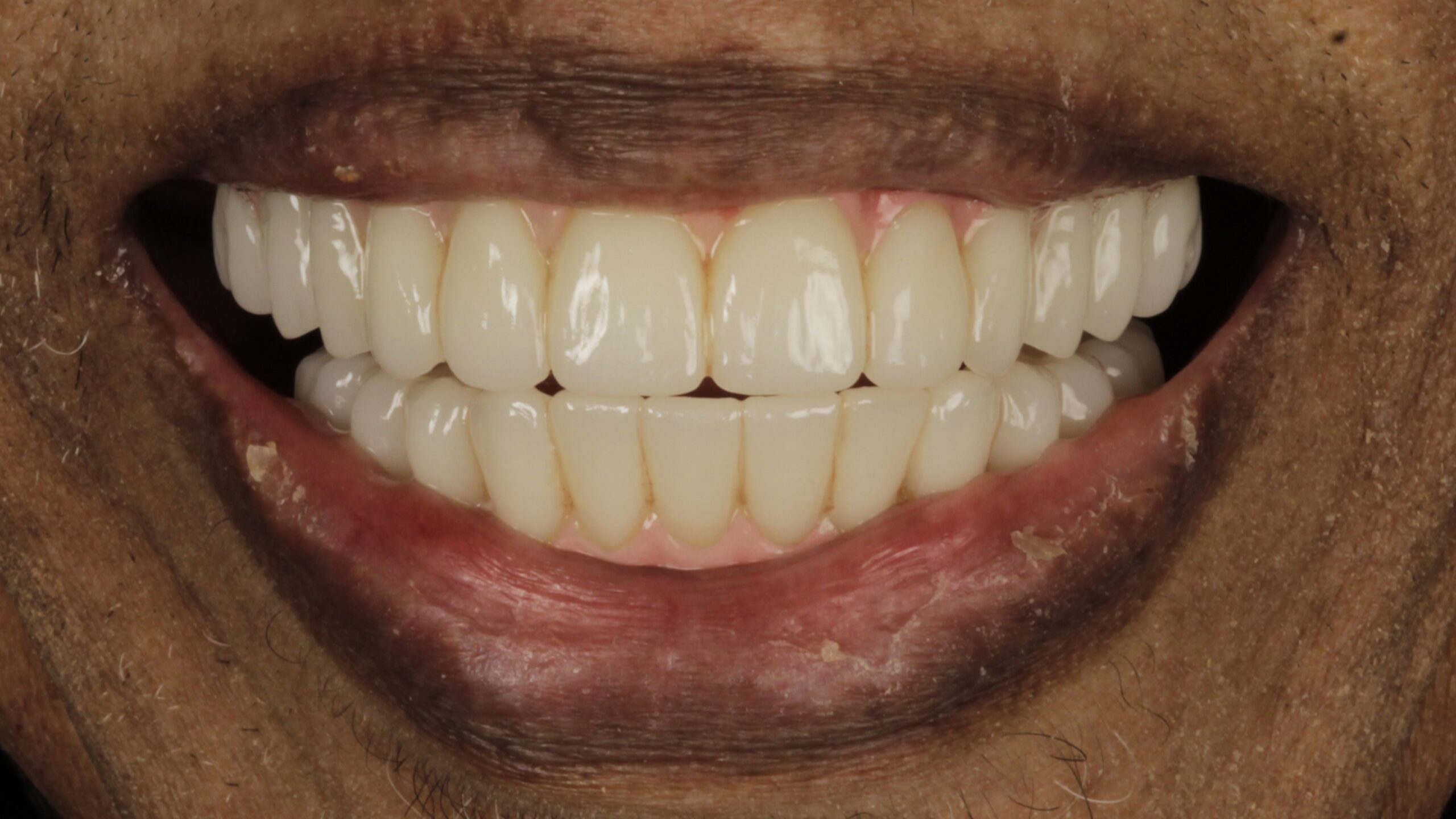 BeforeAfter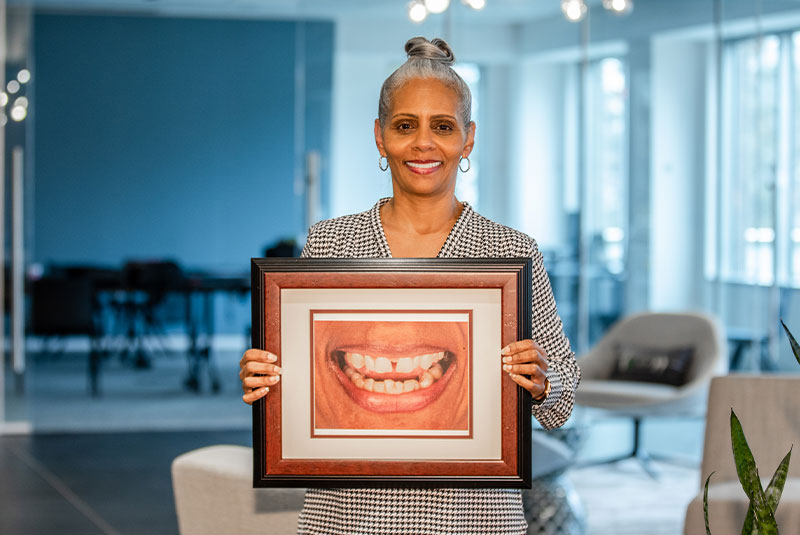
A consultation includes the 3D scan and a straight answer about what your case actually needs, before you commit to anything.