Consultation & cone-beam scan
A full-mouth examination and a 3D scan establish whether there is enough bone. You see real before-and-after cases, and pricing, insurance and financing are discussed then, not later.


Where a single implant carries one tooth, All-on-4 carries an entire upper or lower arch on four titanium posts. Most patients walk out of surgery with a fixed provisional set of teeth already in place.
A failing arch usually comes with bone loss, and the traditional answer was to graft for a year before anyone could place anything. All-on-4 works the other way round: the two rear implants are angled forward into the denser bone at the front of the jaw, so four posts can carry a full arch without rebuilding the back of the mouth first.
That is why it is more cost-effective than replacing every tooth with its own implant, and why patients with a failing dentition or severe bone loss are often still candidates.
It is also why placement angle matters so much. Each post has to land at an exact angle, depth and position, or the arch above it will never load evenly. Surgical planning is done digitally from the cone-beam scan and delivered through a computer-generated surgical guide.
How implants work generallyA full-mouth examination and a 3D scan establish whether there is enough bone. You see real before-and-after cases, and pricing, insurance and financing are discussed then, not later.
The four posts go in, in a single visit, under nitrous, oral or IV sedation. You leave the same day wearing a fixed PMMA provisional arch, not a removable denture.
Three to four months while the posts fuse with the jaw, with review appointments along the way to check integration and adjust the provisional.
The definitive prosthesis is fitted. A further two to four months completes healing around it. After that it is brushed and flossed like teeth.

A conventional denture rests on gum tissue, moves against it, and needs taking out. A full arch on implants is screwed down. The difference shows up in comfort first and in bone second.
Every pair below is a patient of this practice. Single arch means one jaw was restored; double means both.
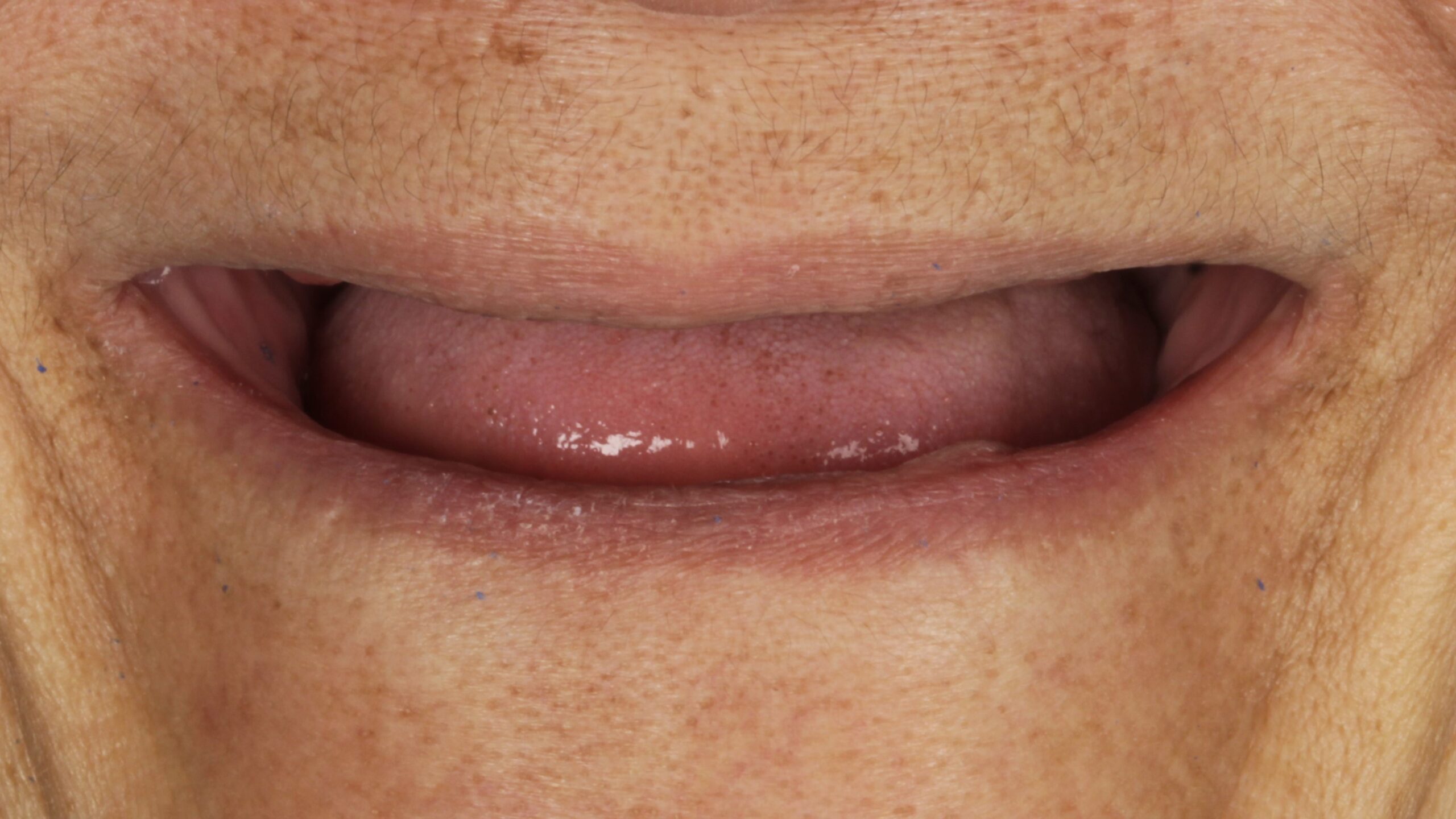
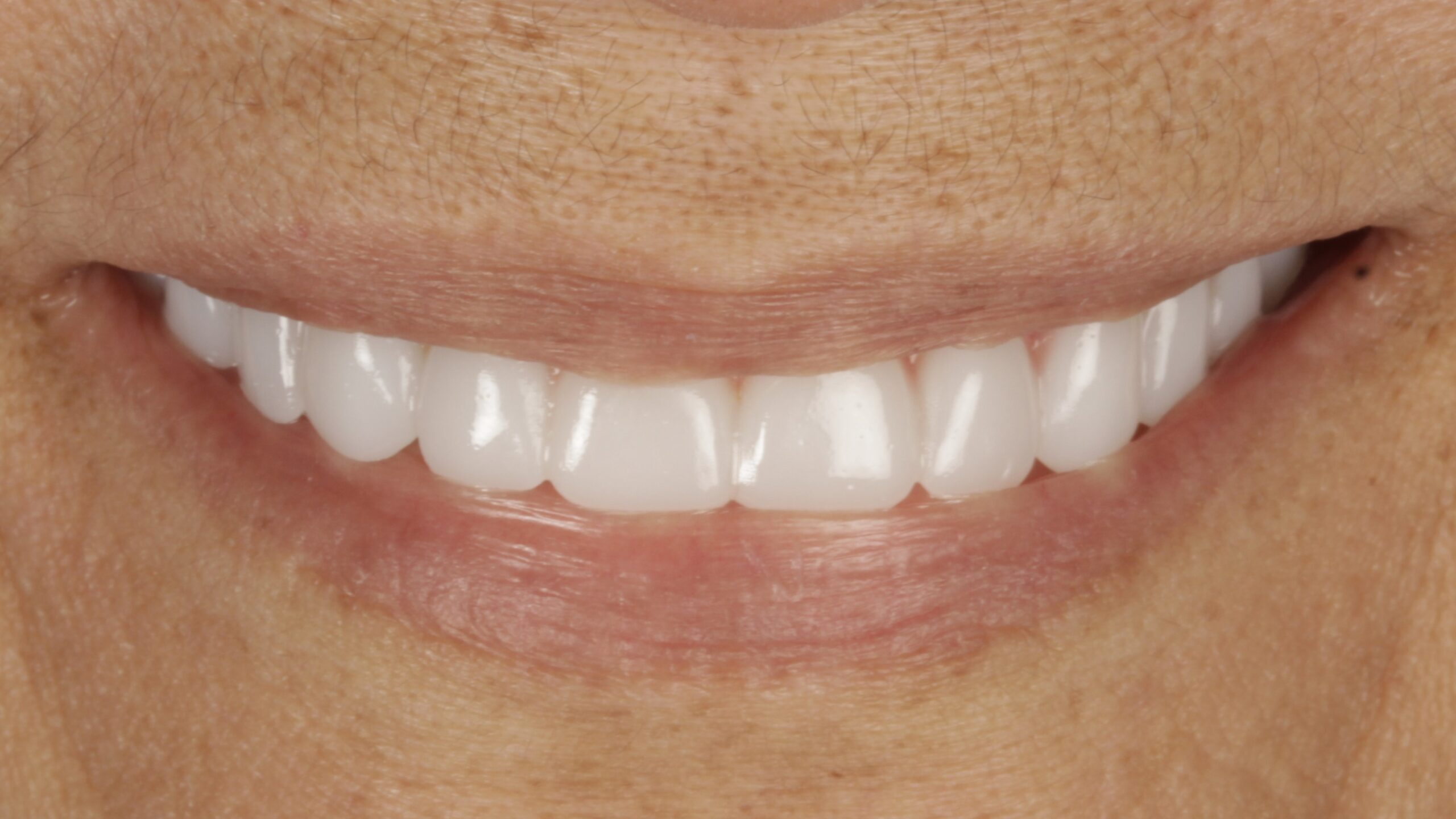 BeforeAfter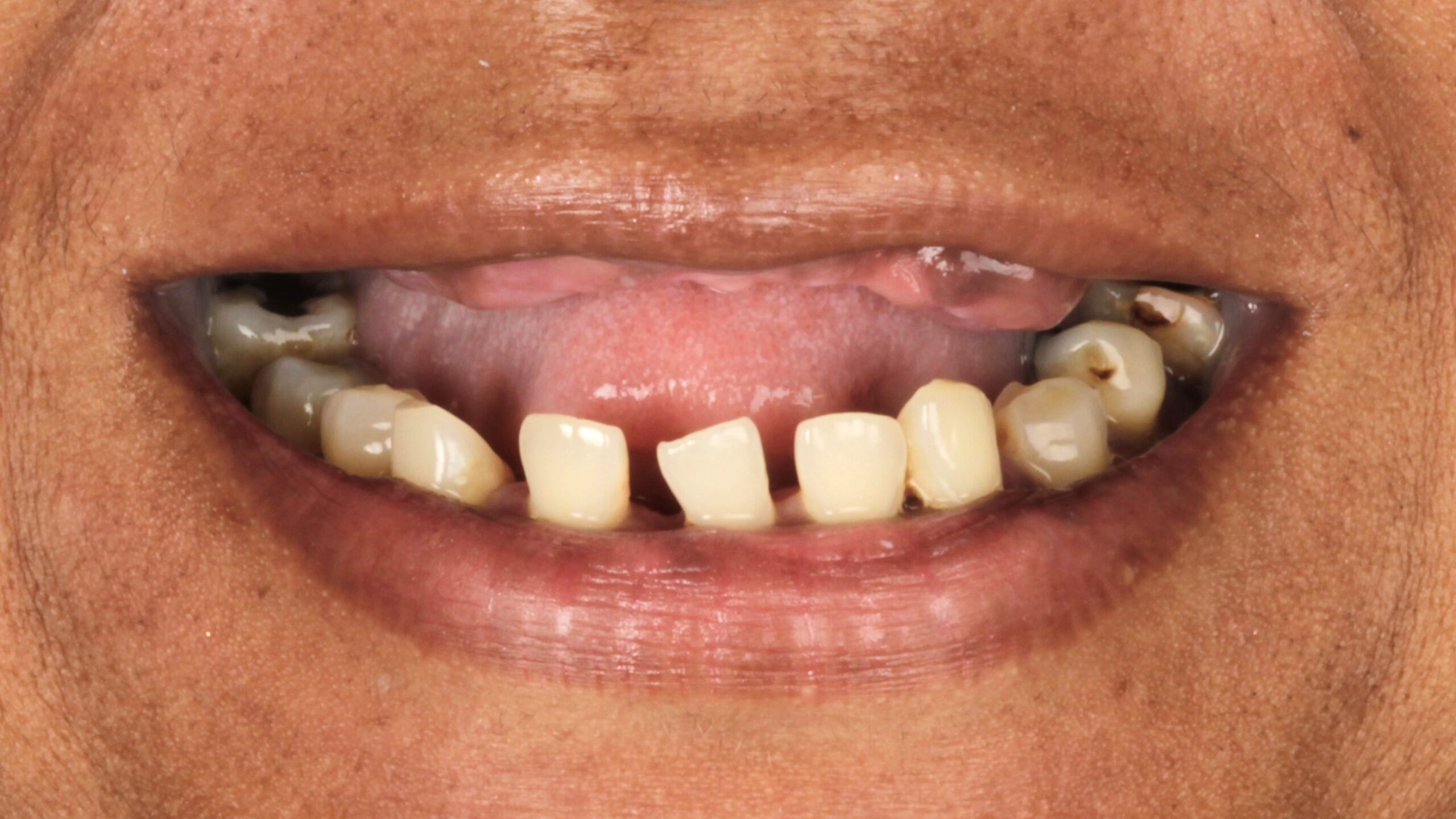
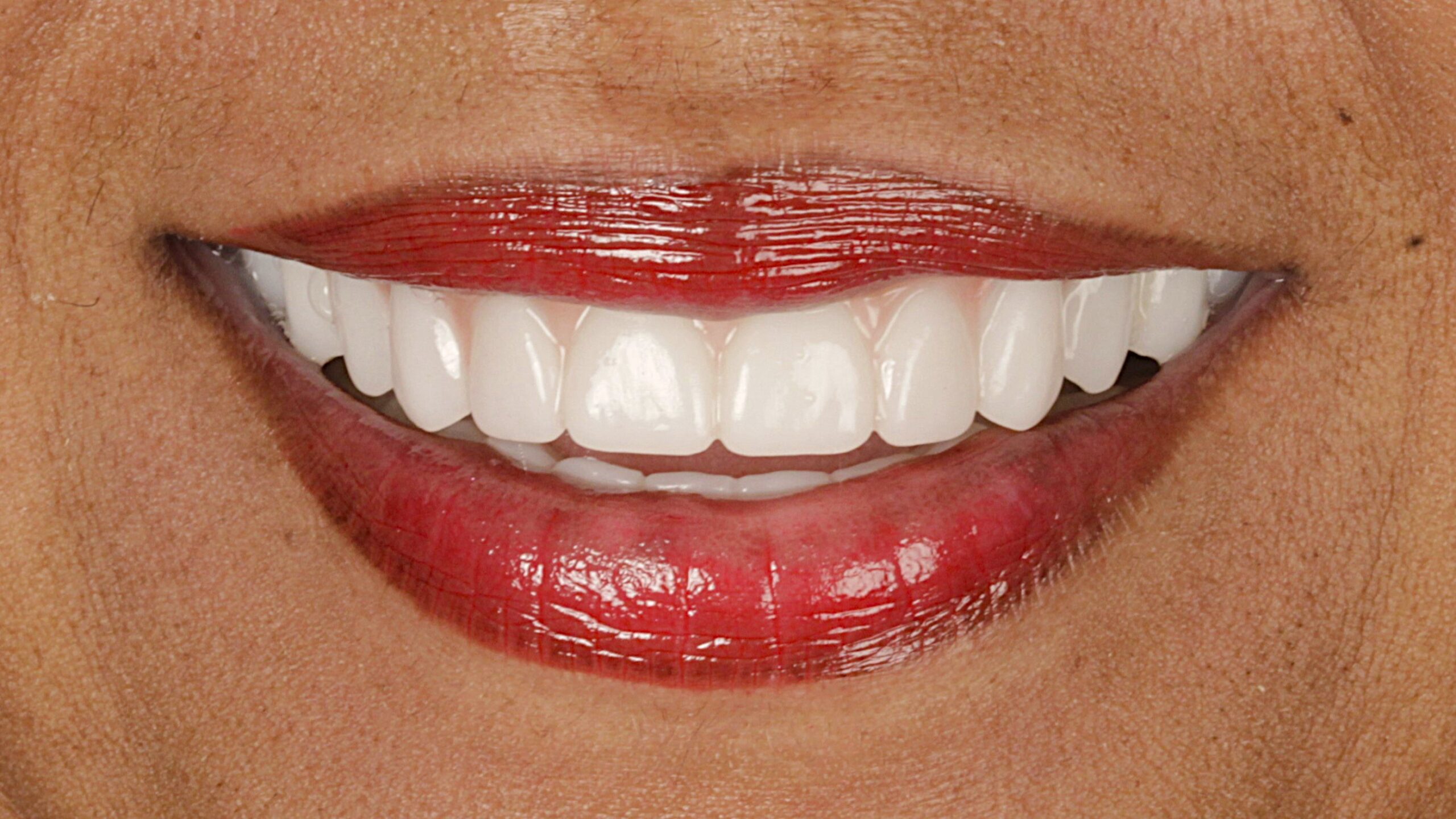 BeforeAfter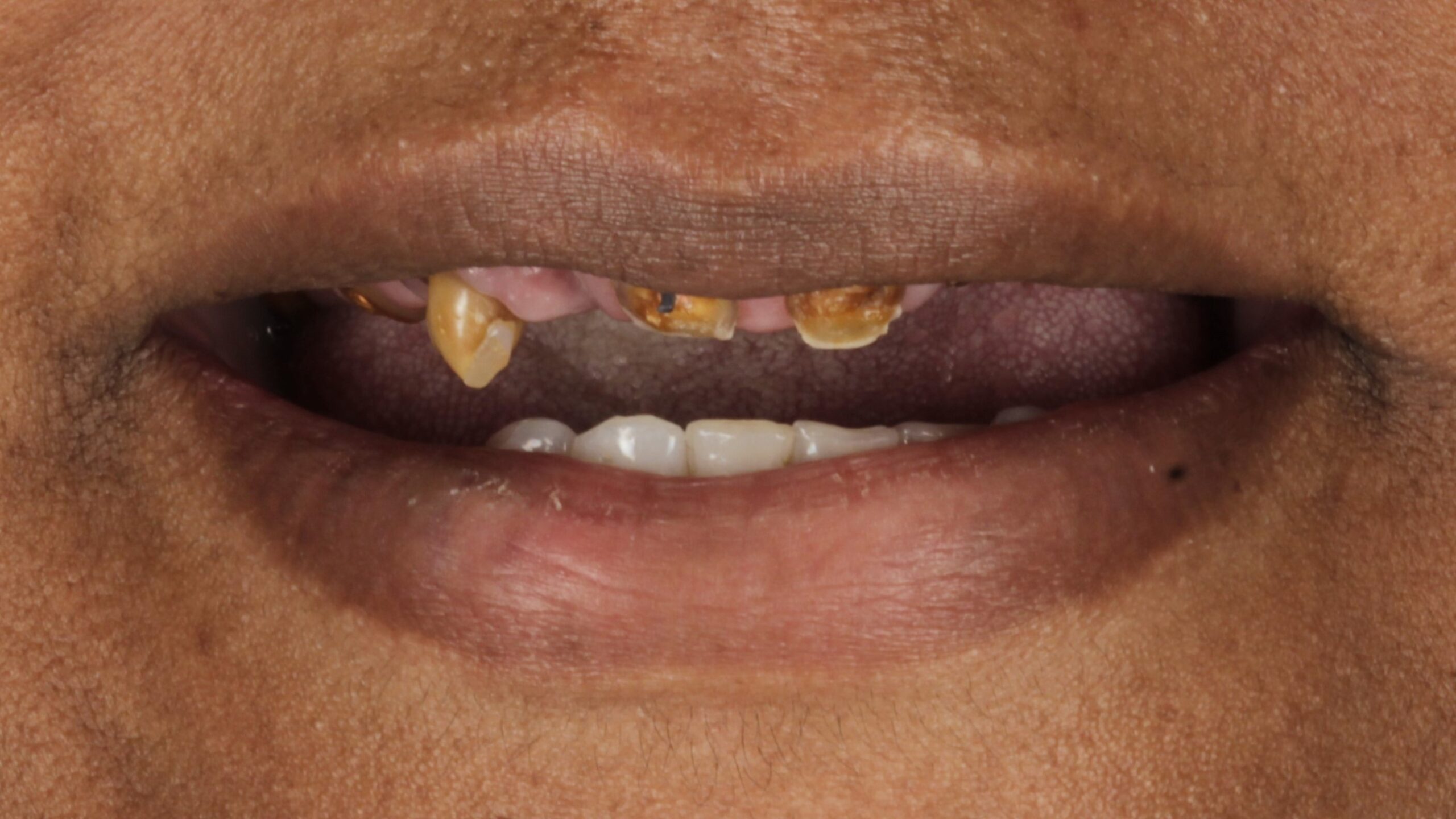
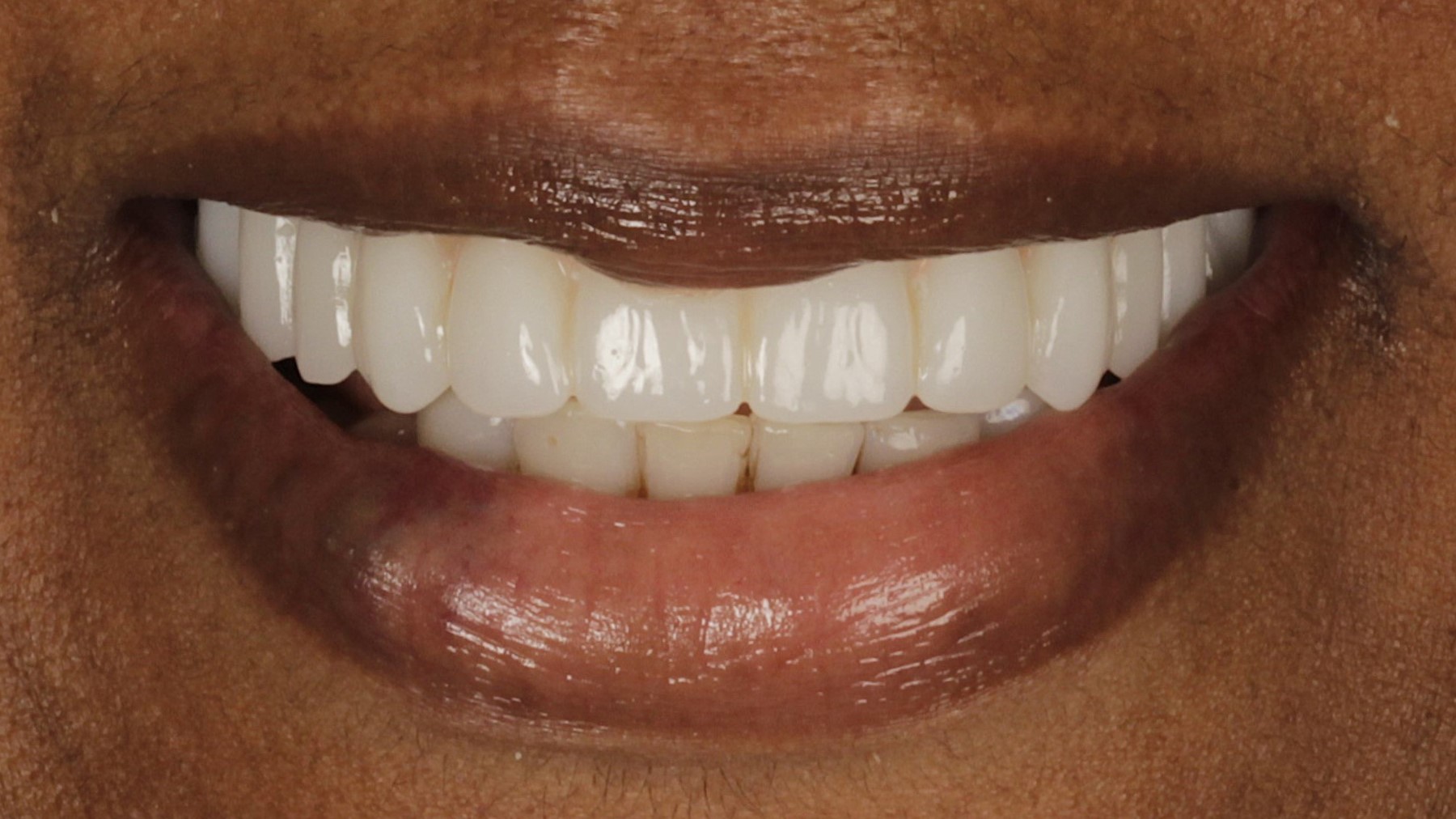 BeforeAfter
My smile held me back. That’s behind me due to my dental implants.
A fully functional PMMA provisional arch is fitted the same day the implants are placed. You do not go home without teeth.
All-on-4 carries a warranty conditional on Precare: general cleanings every six months, the same interval any set of teeth needs.
If another practice has quoted you for implant surgery, a second opinion here costs nothing. Bring the plan and the scan.
The consultation includes the cone-beam scan and a straight answer on candidacy, cost and timeline.
Book your consult